

Yes and no. Tennessee follows modified caveat emptor: buyers are expected to inspect the property, but you as a for-sale-by-owner seller can still be sued after closing for hiding a known latent defect or lying on your disclosure form (Tenn. Code Ann. § 66-5-201 et seq.). That single distinction is the difference between a clean sale and a demand letter landing in your mailbox six months later.
"Buyer beware" is not a shield. Tennessee's Residential Property Disclosure Act binds private sellers to the same statutory disclosure duties as represented sellers. Leave the wrong box blank, and caveat emptor won't save you.
This guide serves two people: the seller doing it right before listing, and the seller who just got a demand letter. You'll get the doctrine in plain English, the patent-versus-latent distinction, why "as-is" isn't the protection you think, a step-by-step defense shield, and what to do if a buyer sues.
One caveat: this is education, not legal advice. Statutes get amended and courts weigh disputes case by case. For your specific situation, consult a licensed Tennessee real estate litigation attorney.
Is Tennessee a Buyer Beware State?
Yes and no. Tennessee is a modified buyer-beware state. Under caveat emptor the buyer carries the duty to inspect, but the Residential Property Disclosure Act (Tenn. Code Ann. § 66-5-201 et seq.) carves out an exception: a seller who knowingly conceals a latent defect or misrepresents the property's condition can still be held liable after closing.
The short version: inspection is the buyer's job, honesty is yours.
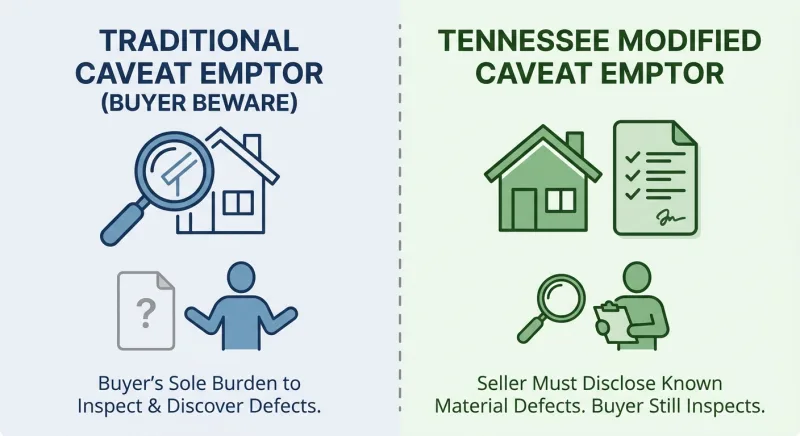
What Is Modified Caveat Emptor in Tennessee?
Modified caveat emptor means the general rule still applies, but Tennessee law adds a carve-back: you can't use the buyer's inspection duty as cover for fraudulent concealment or misrepresentation of a known defect.
- A defect the buyer could have found by reasonable inspection — generally the buyer's risk.
- A defect you knew about and hid, downplayed, or lied about — potentially your liability.
The doctrine doesn't punish you for owning an old house with problems. It punishes you for knowing about a problem and choosing silence or a lie.
A buyer alleging you hid a defect may plead fraudulent concealment (you actively hid it), intentional misrepresentation (you lied), or negligent misrepresentation (you stated something false without reasonable grounds). Each carries different proof requirements — which is exactly why your written record is your best friend.
What Do the Tennessee Disclosure Forms Require?
The Disclosure Act (Tenn. Code Ann. § 66-5-202) requires most residential sellers to give the buyer a written disclosure of the property's known condition before the contract is binding. FSBO sellers are bound exactly like agent-represented sellers.
| Form | What it is | What it protects |
|---|---|---|
| RF201 — Property Condition Disclosure | Full written disclosure of known condition, item by item | Documents what you did and didn't know — your primary defense record |
| RF204 — Property Condition Disclaimer | Buyer takes property "as is" and waives seller disclosure | Waives the disclosure, not liability for fraudulent concealment |
Two supporting forms round out the set: RF202 (amendment when your knowledge changes) and RF203 (exemption notification).
The critical trap: choosing the disclaimer does not erase the concealment exception. A disclaimer trims your disclosure obligation. It does not license fraud.
Patent Defect vs. Latent Defect: What's the Difference?
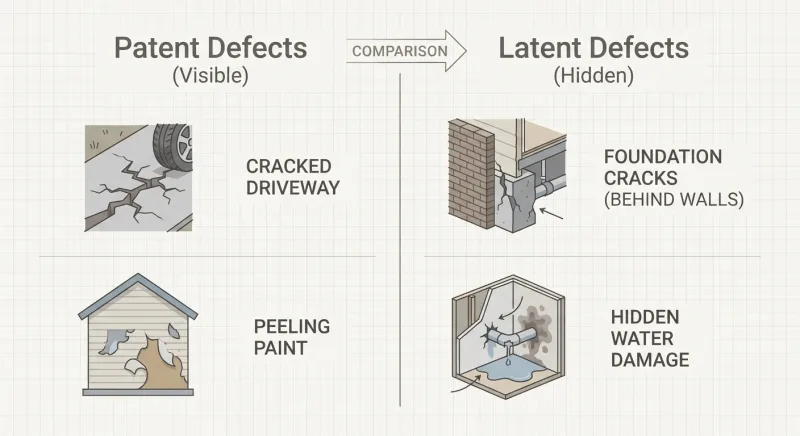
A patent defect is discoverable through ordinary observation or reasonable inspection. A latent defect is a hidden material problem the buyer could not reasonably discover — and latent defects tied to your actual knowledge generate most FSBO post-closing lawsuits.
| Patent defect | Latent defect | |
|---|---|---|
| Definition | Visible / discoverable by reasonable inspection | Hidden; not reasonably discoverable |
| Examples | Cracked driveway, peeling paint, sagging deck | Foundation cracks behind finished walls, prior flooding painted over, buried drainage failure |
| Who bears the risk | Generally the buyer | Seller, if the seller knew and concealed it |
| Key legal test | Was it observable? | Did the seller have actual knowledge and fail to disclose? |
Liability generally attaches to concealment of a known latent defect, not to defects you genuinely didn't know about (Tenn. Code Ann. § 66-5-208). A buyer suing you must generally show you knew about the hidden problem — which is why what you write, and what you leave blank, matters more than the defect itself.
Do You Have to Update the Disclosure Before Closing?
Yes. If you gain new knowledge of a material defect between signing and closing, Tennessee's framework contemplates updating the buyer, and RF202 exists for exactly this.
Where FSBO sellers get caught: the buyer orders an inspection, the report flags a problem you didn't know about — and now you know. New knowledge can create a new duty. Common triggers:
- The buyer's inspection report reveals a defect you weren't aware of.
- A storm, leak, or system failure damages the property before closing.
- A contractor discovers a bigger underlying issue.
When your knowledge changes, put the update in writing (RF202), give it to the buyer, and keep a dated copy.
Does an "As-Is" Clause Protect Me From Being Sued?
Not the way most sellers think. An "as-is" clause says "I'm not promising the condition and I'm not making repairs." It does not say "I can hide the flooded basement I painted over last spring."
Under Tenn. Code Ann. § 66-5-208, the act's liability protections don't cover a seller who knowingly makes a false statement or actively conceals a known latent defect. Tennessee courts have generally treated fraudulent concealment as a separate cause of action that survives an as-is agreement.
- As-is handles patent, discoverable condition. The buyer accepts what inspection would reveal.
- As-is does not neutralize fraud. Active concealment of known latent defects generally survives.
Generic "buyer accepts property as-is" language is weak. A written statement that the buyer "received the inspection report identifying the crawlspace moisture and elects to proceed with no repair request" is far stronger — it converts a latent defect into a disclosed, acknowledged one. Reliance evaporates.
Disclose vs. Disclaim vs. Stay Silent
| Your choice | What it means | Likely litigation outcome |
|---|---|---|
| Disclose | State the known defect plainly on RF201 | Strongest — buyer had notice, reliance defeated |
| Disclaim (RF204) | Sell with a no-representations disclaimer where permitted | Protects on unknown defects; does not cover known concealment |
| Stay silent | Leave a known material defect blank | Weakest — the exact fact pattern that fuels concealment claims |
How Do You Build a FSBO Defense Shield Before You List?
Your best defense is built before a single showing. Because Tennessee liability turns on known concealment, the strategy is to document what you knew, disclose it plainly, and prove the buyer had a fair chance to investigate.
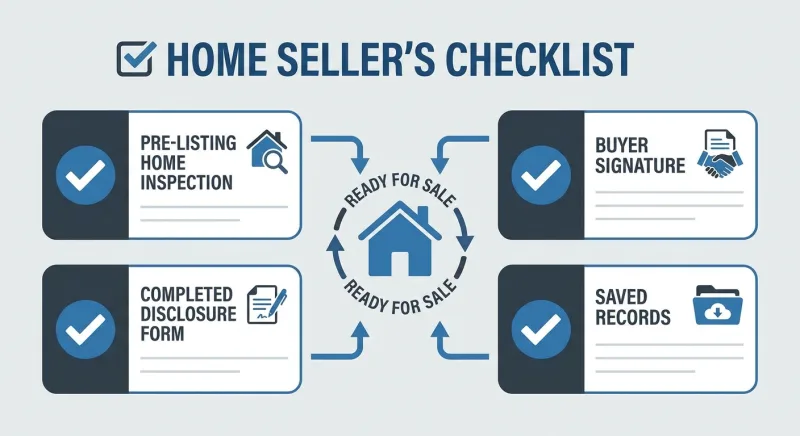
1. Get a pre-listing home inspection. A licensed inspector's report converts vague suspicions into documented facts you can honestly disclose and shows good faith if a buyer later claims you should have known something.
2. Complete the RF201 fully and honestly. There's no private-seller loophole. A "yes, and here's the context" almost never creates liability. A blank does.
3. Get a written buyer waiver of anything sold as-is. Have the buyer acknowledge in the contract that they received your disclosure, had the opportunity to inspect, and are proceeding on their own investigation.
4. Document the buyer's due diligence. Keep the inspection contingency, repair requests, and every email. Post-closing, the buyer's argument is usually "I had no way to know." Your file should answer: you gave them a licensed inspector, an open contingency window, and full access.
5. Preserve the entire record for years. Post-closing claims surface months or years later, when a new issue appears and the buyer goes looking backward. The seller with an organized file wins the credibility contest before the first hearing.
How Does a Buyer Actually Win a Fraudulent Concealment Claim?
A buyer pursuing a concealment or misrepresentation claim must generally show four things:
- You had actual knowledge of a material defect — not "should have known" (Tenn. Code Ann. § 66-5-208).
- The defect was latent — not discoverable through the buyer's reasonable inspection.
- You concealed or misrepresented it on the disclosure or by active cover-up.
- The buyer justifiably relied on your statement or silence and was damaged.
Actual knowledge isn't limited to what you say out loud. Courts generally infer it from repair invoices, contractor emails, photos, or texts. If a document exists showing you knew, the requirement is met regardless of what the disclosure form says.
The strongest FSBO defenses attack element two: if a competent inspection would have flagged the issue, the defect leans patent, and the buyer's duty shifts risk back onto them.
| Defect scenario | Disclosed? | Discoverable? | Liability exposure |
|---|---|---|---|
| Cracked foundation, disclosed on RF201 | Yes | Yes | Very low |
| Hidden past flooding, painted over | No | No | High |
| Aging roof, obvious wear, not mentioned | No | Yes | Low |
| Recurring septic failure, seller silent | No | Sometimes | High if actual knowledge provable |
Exposure spikes where knowledge + concealment + non-discoverability stack together. Break any one, and the claim weakens.
How Do Damages and Remedies Work After Closing?
- Actual (compensatory) damages — typically repair cost or diminution in property value.
- Rescission — unwinding the sale entirely; harder to obtain, usually requiring prompt action and substantial harm.
- Punitive damages — reserved for egregious, intentional conduct under a heightened evidentiary standard.
Intentional concealment opens the door to the harshest remedies. The discovery rule can delay the limitations clock until the buyer reasonably should have discovered the defect — extending the practical window well past closing. Treat your records as long-term insurance.
Special Property Situations
Inherited or estate properties. Sellers of a home they never lived in may lack actual knowledge, and certain transfers may fall under disclosure exemptions (Tenn. Code Ann. § 66-5-209). But "I inherited it" is not automatic immunity — if the estate has documents showing knowledge, that knowledge can be imputed.
Recently renovated homes. If you opened a wall, you saw what was behind it. Silence about a defect you personally exposed during a remodel is the cleanest possible fraudulent-concealment fact pattern.
Homes with prior insurance claims. A past water or fire claim creates a paper trail outside your control. Assume it's discoverable and disclose it.
The unifying principle: your liability tracks your knowledge, not your role.
Frequently Asked Questions
Is Tennessee a buyer beware state?
Yes and no. Tennessee follows modified caveat emptor: buyers are expected to inspect (Tenn. Code Ann. § 66-5-201 et seq.), but sellers can still be sued for hiding known latent defects or lying on the disclosure form.
Can a buyer sue me after closing in Tennessee?
Yes. Under Tenn. Code Ann. § 66-5-201 et seq., a buyer can pursue a post-closing claim if you concealed a known latent defect or made a false statement on the disclosure form — even after the deed transfers. Consult a licensed Tennessee real estate litigation attorney about your specific facts.
Does an "as-is" clause protect an FSBO seller from a lawsuit?
Not fully. An as-is clause (RF204) generally shifts responsibility for defects the buyer could have discovered, but does not shield a seller who actively conceals a known latent defect or makes an affirmative misrepresentation. Courts weigh this case by case.
What is a latent defect in Tennessee?
A latent defect is a hidden material problem the buyer can't reasonably discover — foundation issues behind finished walls, concealed water damage. A patent defect is visible on reasonable inspection. Seller liability generally attaches to concealment of known latent defects.
Do FSBO sellers have to complete the disclosure form?
Yes. The Residential Property Disclosure Act binds private FSBO sellers just as it binds agent-represented sellers, unless a statutory exemption under § 66-5-209 applies.
What should I do first if I receive a demand letter after closing?
Do not respond substantively, admit fault, or contact the buyer directly. Preserve every document — disclosure, inspection report, repair records, delivery proof — and retain a licensed Tennessee real estate litigation attorney immediately.
The Short Version
Tennessee's modified caveat emptor rule protects honest FSBO sellers and punishes deceptive ones. Buyers carry a real duty to inspect, but that duty never erases yours to disclose what you actually know. The line between a clean closing and a demand letter is almost never the roof — it's what the seller knew and left blank.
Build your defense before you list. Complete the RF201 truthfully. Update it when an inspection surfaces something new. Get a pre-listing inspection. Get the buyer's waiver in writing and keep every signed page.
If a claim already landed on your doorstep, retain a licensed Tennessee real estate litigation attorney and preserve your records before you say a word. Nothing here is legal advice; it's a map of the terrain so you can ask sharper questions.
Disclose it, don't defend it later. When you're ready to list the right way, start with our guides on for sale by owner in Tennessee and flat fee MLS in Tennessee.