
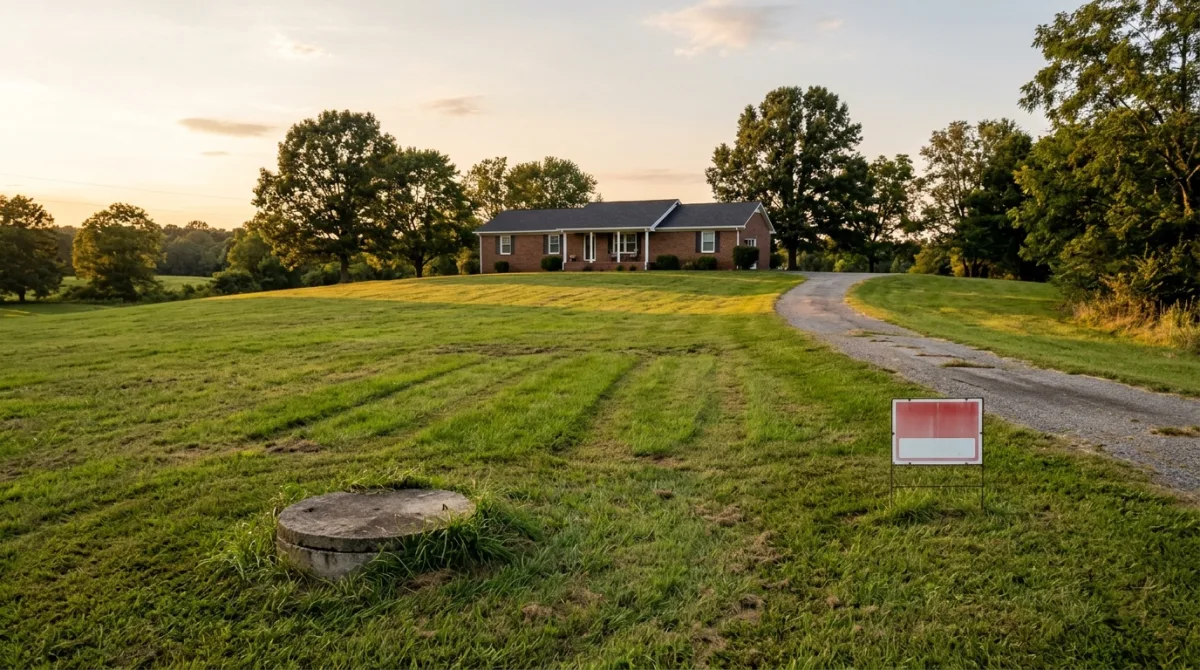
In Tennessee, every septic system is permitted for a specific number of bedrooms. If you advertise more bedrooms than that permit allows, you can face disclosure and misrepresentation exposure, and the deal can die at appraisal or underwriting. Check your permit before you list.
In an FSBO sale, you type the bedroom number into the MLS yourself, and it flows to Zillow, Realtor.com and every buyer's agent in the state. You control the number, so it has to be right.
This is general information about Tennessee law, not legal advice for your situation.
Can You List More Bedrooms Than Your Septic Permit Allows?
No, not safely. A home permitted for three bedrooms should be listed as three, even if you've finished the basement or converted the bonus room over the garage. The extra space still has value. It just isn't a bedroom on paper. The permit decides, not the floor plan.
What the Bedroom Count on a Septic Permit Actually Means
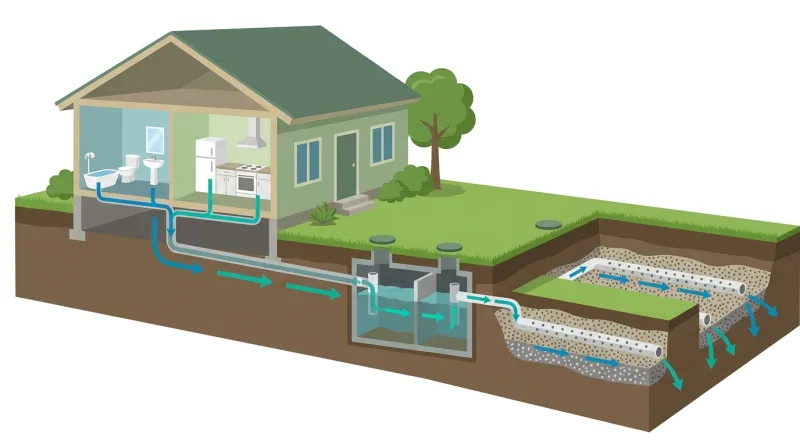
The bedroom count is the maximum load the system was designed to handle. Tennessee sizes a subsurface sewage disposal system (SSDS) by bedrooms because they stand in for how many people live in a house, and so for how much wastewater leaves it daily (Tenn. Comp. R. & Regs. 0400-48-01).
Three things set that number. A soil evaluation shows how fast the ground absorbs effluent. The tank is sized to expected daily flow. The drain field length is calculated from both. Add a bedroom on paper and you've told buyers the system handles more than it was built for.

TCA 47-18-104 and the Disclosure Act: New Construction vs. Resale
Which Tennessee law applies depends on whether the home is newly built or a resale. Most FSBO sellers fall under resale rules.
For new homes, the Tennessee Consumer Protection Act, Tenn. Code Ann. § 47-18-104(b), lists unfair or deceptive practices, including knowingly advertising a newly constructed residence as having more bedrooms than its SSDS permit allows. Note the two limits: newly constructed and knowingly. Under § 47-18-109, courts can award actual damages, up to treble damages for willful or knowing violations, and attorney's fees. Later amendments have narrowed the TCPA's reach, so its application to a given sale isn't always clear-cut.
Resale homes fall under the Tennessee Residential Property Disclosure Act (Tenn. Code Ann. § 66-5-201 et seq.), which requires most sellers of existing one-to-four-unit homes to disclose known conditions, including the sewage system. Ordinary misrepresentation law applies on top. List a converted garage as a fourth bedroom on a three-bedroom permit, and a buyer may claim you misstated a material fact.
| New construction | Resale / FSBO home | |
|---|---|---|
| Governing law | TCPA, § 47-18-104(b) and § 47-18-109 | Residential Property Disclosure Act, § 66-5-201 et seq., plus common-law misrepresentation |
| Who is exposed | Builders and sellers marketing newly built homes | Owners selling existing homes, including FSBO sellers |
| Possible buyer remedies | Actual damages; courts may award treble damages and attorney's fees | Damages for misrepresentation or nondisclosure, depending on the facts and the contract |
Summarized from Tennessee Code Annotated, Titles 47 and 66. Statutes change, so check the current official text.
Tennessee has no single statewide definition of "bedroom." Whether a room with a closet and a window counts can depend on the permit, the local inspector and the appraiser. If your situation is gray, a Tennessee real estate attorney can review your permit and disclosures before you list.
Where to Find Your Septic Permit (TDEC vs. the 9 Contract Counties)
In most of Tennessee, your permit record sits with TDEC's Division of Water Resources, Ground Water Protection program. Nine contract counties run their own programs: Blount, Davidson, Hamilton, Jefferson, Knox, Madison, Sevier, Shelby and Williamson.
Contact your county health or environmental department if you're on that list, or your regional TDEC Environmental Field Office if not. Have your address, parcel ID, original owner's name and approximate build year ready. Ask for the original SSDS permit plus any repair or expansion permits. The approved bedroom count is usually stated on the permit or construction approval.
Two documents get confused. An Existing System Inspection Letter evaluates whether an existing system can support a proposed change, such as an addition, and TDEC has charged around $200 for it. A Certificate of Verification is generally used to verify an existing system when establishing electric service for a new dwelling, with a $100 state fee under TDEC rules. Fees and turnaround vary, so confirm with your office and request early.
Edge Cases the Basic Rule Doesn't Cover
No permit on file. Older rural homes sometimes predate the program or have lost records. That doesn't mean unlimited bedrooms; it means you can't prove any number. Describe the rooms honestly, disclose that no record was located, and consider ordering an evaluation.
Repaired or replaced systems. If a 1998 permit was issued for three bedrooms and a 2015 drain field replacement was permitted for four, the newer document usually reflects what's in the ground now. Pull both, and list the number on the most recent permit matching the installed system.
A guest house, ADU or mobile home on the same system. If a detached unit ties into the tank and the permit doesn't mention it, "plus guest suite" advertises capacity the record doesn't show. Disclose the connection exactly as it exists.
Alternative and engineered systems. Drip and low-pressure pipe systems often carry conditions such as maintenance requirements. Lenders and inspectors may ask whether those were met, so keep service records with the permit.
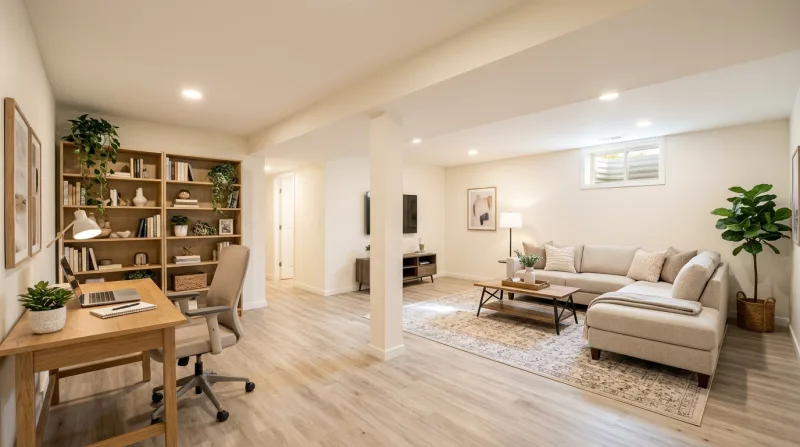
A room that's a bedroom by any normal standard. A fourth room with a closet, window and door, original to the house, still gets listed as three plus a flex room if the permit says three. Calling it a bedroom in the MLS is a capacity claim your permit may not support. If you want to argue otherwise, call an attorney.
Reconcile Three Counts Before You List
A bedroom number can be counted three ways: the permit count, the listing count you enter, and the underwriting count the appraiser reports and the lender relies on. USDA, FHA and VA loans may check that last one against septic records. A mismatch usually surfaces there, weeks into a contract, when renegotiating hurts most.
County assessor records add a fourth count that may not match anything. You can't fix the assessor's file, but you can make your listing and disclosures match the permit.
| Permit says | Floor plan shows | Assessor shows | Safer move |
|---|---|---|---|
| 3 | 3 | 3 | List 3. Done. |
| 3 | 4 | 3 | List 3 plus a bonus or flex room. Disclose its use. |
| 3 | 4 | 4 | List 3. Keep the permit handy for the assessor question. |
| 4 (repair permit) | 4 | 3 | List 4 and attach the repair permit to your disclosures. |
| No record found | 4 | 4 | Don't claim a count you can't document. Disclose the missing record. |
| Main house only | Main house plus guest unit | Varies | List the main house count. Disclose the shared connection. |
General best practice, not a legal safe harbor.
Get it right on day one. Once a flat-fee listing goes live, the count syndicates to portals and data aggregators that often keep listing history. A buyer's agent who sees four bedrooms drop to three will ask why.
There's an upside, too. In USDA-eligible markets around Murfreesboro, Clarksville and the edges of Knoxville and Chattanooga, buyers' agents worry most about septic unknowns. Hand over the permit, its bedroom count and any inspection letter up front, and much of that worry disappears before it becomes a contingency fight.
Pre-Listing Checklist
- Request your septic permit and any repair permits from TDEC or your contract county.
- Identify the most recent permit that matches the installed system and note its bedroom count.
- Compare that number to your floor plan and the assessor record.
- Call any extra rooms a bonus room, office or flex space, and say so in your remarks.
- Answer the sewage questions on your disclosure form accurately and attach the permit if you have it.
- If you need more permitted bedrooms, ask about a permit modification or system upgrade before listing.
- If you've already advertised extra bedrooms, correct the listing now and talk with a Tennessee real estate attorney.
Frequently Asked Questions
Can I list a 4-bedroom house in Tennessee if my septic permit says 3?
You shouldn't advertise it as a four-bedroom. List it as three bedrooms plus an office, bonus room or flex space, and disclose the permitted capacity. Buyers, appraisers and lenders then all see the same number.
Does TCA 47-18-104 apply to resale homes or only new construction?
The septic-specific bedroom language in Tenn. Code Ann. § 47-18-104(b) is generally understood to target newly constructed homes. Resale sellers aren't off the hook, though. Overstating bedrooms can still create exposure under the Tennessee Residential Property Disclosure Act (§ 66-5-201 et seq.) and common-law misrepresentation.
Can I call a finished basement a bedroom if my septic is permitted for 3?
Not if it pushes your advertised count past the permit. Call it a finished basement, rec room or home office, describe its features accurately, and let buyers decide how they'll use it.
How much does a TDEC Existing System Inspection Letter cost?
TDEC's fee has been about $200, and turnaround depends on the local field office's workload. In the nine contract counties, the county health department handles septic records and sets its own fees and timelines, so call ahead.
Do I have to disclose septic bedroom permit details when selling FSBO in Tennessee?
Tennessee's disclosure rules apply to most residential sellers whether or not an agent is involved, and the standard disclosure asks about the sewage system. Answer accurately. Attaching the permit record, if you have it, gives buyers documentation instead of guesses.
Can a buyer back out over a bedroom and septic mismatch?
Often, yes. A mismatch can surface during inspection, appraisal or underwriting, and most purchase contracts give buyers a way to renegotiate or walk at those stages. What's available depends on the contract's contingencies and when the problem comes to light.
List It Right the First Time
A records search costs little. A renegotiated price, a buyer walking during underwriting, or a misrepresentation claim after closing has no fixed price at all.
Once your bedroom count matches your permit, list it on the Tennessee MLS for a flat fee with ResultsMLS. You set the details, and we get your home in front of buyer's agents statewide.