

The flat fee is the advertised price. The closing fee is the actual price. Many Tennessee sellers sign a limited-service listing agreement expecting to pay a few hundred dollars upfront, often $99 to $399. Weeks later, a second broker charge appears on the settlement statement. That charge is the flat fee MLS closing compliance fee in Tennessee. Among the providers we reviewed, published flat amounts commonly ran from $495 to $995. Some plans take a percentage of the sale price instead.
The fee isn't automatically a scam. Tennessee principal brokers have real supervision and recordkeeping duties, and a flat fee tied to that work can be fair if you're told about it at signing. The trouble starts when it's buried on page two or grows with your price.
We read listing agreements and published fee schedules line by line. The schedules cited here were reviewed in July 2026. Read the second page, not the first.
What Is a Flat Fee MLS Closing Compliance Fee in Tennessee?
It's a second charge from your listing broker, collected when the sale closes. It's legal and common, and it's easy to miss when you compare plans.
Definition: A flat fee MLS closing compliance fee in Tennessee is a seller-paid charge the listing broker collects at closing, separate from the upfront listing fee. It's either a flat amount, commonly $495 to $995, or a percentage of the sale price with a minimum. The title company or closing attorney deducts it from your proceeds. (Fee schedules reviewed July 2026.)
The upfront price is the number on the pricing page. The closing fee usually sits in the listing agreement, a page or two past the price summary. It comes out of your proceeds months later.
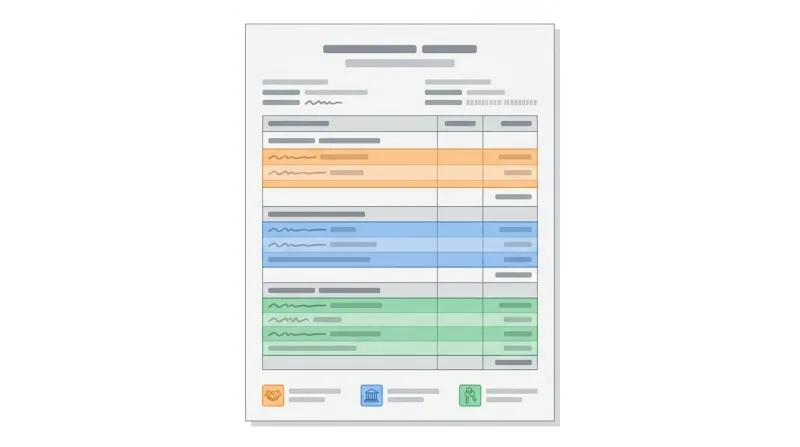
Where Does the Transaction Fee at Closing Show Up on Your Settlement Statement?
It shows up as a seller debit, usually near the commission or broker-charges lines. The settlement agent pays it to the listing broker straight from your proceeds, so you never write a separate check.
Tennessee closings run through title companies or closing attorneys. Most use the ALTA settlement statement, the standardized form from the American Land Title Association. That form has no dedicated "compliance fee" field. The label comes from your broker's own wording, carried over from the listing agreement. Common versions:
- Broker administrative fee
- Transaction fee
- Compliance fee or closing compliance fee
- File audit or file review fee
- Broker review fee
- Closing fee or success fee
If your buyer is financing, you may also see a Closing Disclosure, the CFPB's TRID form. Seller-paid broker charges can land in its "Other Costs" area, which includes Section H. That's CFPB terminology. Anyone telling you to "check Section H of your ALTA statement" has mixed up two documents.
Keep this fee apart from third-party costs. Tennessee's realty transfer tax is $0.37 per $100 of sale price under T.C.A. § 67-4-409(a), per the Tennessee Department of Revenue. On a $400,000 sale, that's $1,480. Local custom and the standard purchase forms often put it on the buyer, but it's negotiable, so check your contract. Title insurance and recording fees vary by county and title company.
Of all these charges, your listing broker sets only one: the compliance fee.
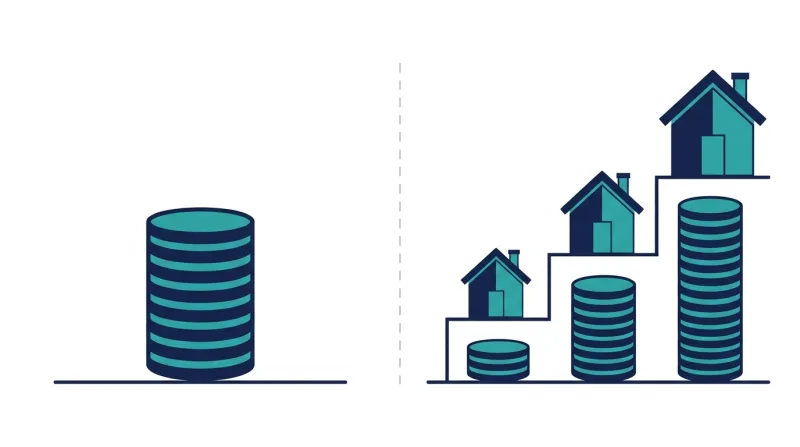
Flat vs. Percentage: The Two Models Behind the "$495 to $995" Range
There are two models: a fixed administrative fee, or a percentage of the sale price with a minimum. Competitor pages often blur them. The difference can run to thousands of dollars.
| Model | How it's calculated | Range observed (July 2026) |
|---|---|---|
| A: Fixed compliance/admin fee | One dollar amount, regardless of price | $495 to $995 |
| B: Percentage closing fee | Sale price × rate, with a minimum floor | 0.25% to 1.25%, minimums near $999 |
Model A stays the same whether you sell for $250,000 or $900,000. Published figures from Tennessee-serving providers include HomeRise at $495, Rochford Law / CRS at $550 and DIYFlatFee at $699. The upper end, up to $995, generally appears in higher-tier packages or agreements from select boutique brokerages. You can budget for a fixed fee the day you sign.
Model B grows with your price. Houzeo publishes 0.5% to 1.25% depending on plan, with a $999 minimum. ListWithFreedom publishes 0.25% to 0.5%. (Checked July 2026.)
Most sellers skim right past the minimum. If the percentage comes in under the floor, you pay the floor. And unless the agreement sets a cap, nothing stops the percentage from climbing on a pricier Brentwood or Franklin listing.
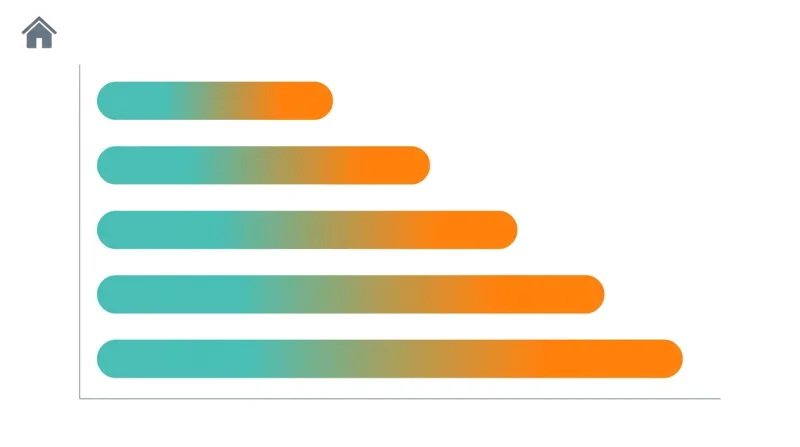
How Much Does a Closing Fee Cut From Your Net Proceeds?
On a $400,000 Tennessee sale, the closing fee alone can range from $0 to $5,000, depending on the model. We use $400,000 because the Tennessee REALTORS statewide median has run close to that figure.
Prices vary widely by region, though. Greater Nashville REALTORS has reported a regional median near $480,000, and Williamson County medians have approached $1 million. Much of Shelby County and rural East Tennessee sits well below the state figure. The table below runs the same fee models across those price points. All figures are illustrative, not quotes.
| Sale price | Flat $495 | Flat $995 | 0.25%, no min | 0.5%, $999 min | 1.25%, $999 min |
|---|---|---|---|---|---|
| $250,000 (Clarksville, Knoxville starter) | $495 | $995 | $625 | $1,250 | $3,125 |
| $400,000 (near TN median) | $495 | $995 | $1,000 | $2,000 | $5,000 |
| $650,000 (Franklin, Brentwood range) | $495 | $995 | $1,625 | $3,250 | $8,125 |
| $1,000,000 (upper Williamson County) | $495 | $995 | $2,500 | $5,000 | $12,500 |
Add your upfront fee to any cell to get the plan's real cost. Here's the formula for percentage plans: sale price × rate, compared to the minimum. Whichever is higher is what you pay.
The break-even shortcut
A percentage fee beats a flat fee only below one price:
Break-even price = Flat fee ÷ Percentage rate
- 0.25% vs. $995 flat: $995 ÷ 0.0025 = $398,000. At $400,000, the two plans differ by $5, so other terms should decide.
- 0.5% vs. $995 flat: the $999 minimum already exceeds $995, so the flat fee wins at every price.
- 1.25% vs. $495 flat: break-even is $39,600. No realistic Tennessee sale falls below that.
Here's the regional catch. A plan that looks competitive for a modest Chattanooga home can be one of the priciest options for a Brentwood listing, and its upfront price won't show it. The higher your expected price, the more the closing fee matters and the less the upfront fee does. Once you're selling at $800,000, a $300 gap in upfront fees barely registers.

When Is a Closing Compliance Fee Reasonable, and When Is It a Junk Fee?
It's reasonable when it's disclosed at signing, fixed or clearly capped, and tied to real broker work. It's a red flag when it's buried, scales with price for no stated reason, or covers work nobody did.
The duties are real. TREC requires a principal broker to supervise every licensee and transaction in the firm. Licensees owe duties to all parties, including honesty and diligence, under T.C.A. § 62-13-403. Agency relationships must be disclosed under § 62-13-405. TREC rules in Chapter 1260-02 require brokers to retain transaction records, commonly cited as three years. And under the Tennessee Residential Property Disclosure Act (T.C.A. § 66-5-201 et seq.), the file should show the buyer received a disclosure or qualifying disclaimer. Since the NAR practice changes took effect August 17, 2024, buyer-broker compensation offers can't appear on the MLS, which changed some of the paperwork too.
None of that justifies a specific amount. It explains why a fee exists.
The work-scaling test
The review on a $650,000 Franklin file looks almost identical to the review on a $250,000 Memphis file. Same disclosure forms, same agency paperwork, same records. That's why we think a flat fee is the honest structure for compliance work. Our editorial rule: if the fee doubles when your sale price doubles, it isn't paying for compliance.
A percentage fee isn't automatically improper. Some providers bundle real services into it, like negotiation or contract help. Fine, but treat it as a service fee or partial commission and price it against alternatives.
Reasonable if…
- It's stated in dollars, or as a capped percentage, in the agreement you sign
- It's tied to file review, compliance or closing coordination
- It also appears on the pricing page, not only in the contract
Red flag if…
- It first appears on the draft settlement statement
- It's a percentage with a high minimum and no cap
- It applies when you find your own buyer and the broker did no closing work
- The wording is vague ("broker fees as applicable")
"Junk fee" is our label, not a legal category. A fee can be legal and still be a poor deal. If it's not in writing, assume it's charged.
How the Fee Gets From Your Proceeds to the Broker
The settlement agent doesn't decide what the broker gets paid. Your listing broker does, and your signature on the settlement statement approves it.
The broker sends the title company or closing attorney a compensation instruction, which might be called a commission statement, disbursement authorization or broker demand. The agent copies that figure onto the draft statement. Their job is to disburse funds per the signed documents, not to audit your listing agreement.
So the draft statement is your last practical checkpoint. Before closing, a disputed line can be held, corrected or escrowed. Once funds move, recovery means a written demand to the principal broker, a TREC complaint or a civil claim. TREC handles license-law conduct. It isn't a collections service.
Ask this: "Can you send me the broker's compensation instruction as soon as it goes to the closing agent?" You'll see the number days earlier.
Edge Cases That Change What You Owe
Most agreements assume one scenario: an agent brings a buyer, and the sale closes during the term. Yours may not go that way.
You find the buyer yourself. Some agreements waive or reduce the fee when the seller produces the buyer. Others charge it on any sale. Check whether it's "exclusive right to sell" or "exclusive agency." If the agreement is silent, assume the fee applies.
The listing expires and you sell later. A protection-period (tail) clause can trigger the fee if the buyer first saw the home on the MLS. Check the length of the period, whether the broker must give you a list of protected buyers, and whether relisting with another licensed broker ends the carryover period. Standard Tennessee listing agreements generally address that last point.
You cancel or upgrade. Cancelling can trigger a separate withdrawal fee. Upgrading tiers can quietly swap a flat closing fee for a percentage. Get the new terms in writing first.
The deal falls through. Some agreements say compensation is "earned" at contract signing. If a buyer walks away during due diligence, that wording could support a claim. Look for "payable only upon closing and funding."
Concessions inflate the price. Buyer-agent compensation is now often negotiated as a seller concession. If the price rises to cover it, a fee on "gross sales price" rises too. Check gross versus net.
Short sales, estates, co-owners. Short-sale lenders often disallow discretionary broker fees, so the agreement should say whether you're liable for any amount they refuse. In probate, confirm the signer has authority to bind the estate. Co-owners usually see the fee taken from the gross before the split.
Unrepresented buyers. Some limited-service brokers offer to handle the buyer's paperwork as a "facilitator," a role Tennessee law recognizes, for an added fee. Ask whether you'd pay that and the compliance fee.
Is a Closing Fee Ever Better Than No Closing Fee?
Yes. A modest flat closing fee can cost less than a no-closing-fee plan if there's a real chance your home won't sell on that listing.
The reason is timing. You pay the upfront fee no matter what. A closing fee usually comes from proceeds, so you owe it only if a sale closes. Confirm that wording in your contract. Then price both outcomes. These plans are illustrative, not any provider's quote:
| Illustrative plan ($400,000 sale) | Upfront | Closing fee | If it sells | If it doesn't |
|---|---|---|---|---|
| A: low upfront, flat closing fee | $99 | $495 | $594 | $99 |
| B: higher upfront, no closing fee | $399 | $0 | $399 | $399 |
| C: low upfront, 1.25% closing fee | $99 | $5,000 | $5,099 | $99 |
Plan A's expected cost is $99 + ($495 × your chance of selling). Set that equal to Plan B's $399 and the break-even comes out near 61%. If you're more confident than that, Plan B is cheaper. A well-priced home in an active Middle Tennessee market usually clears that bar. A seller testing a high price or listing rural land with few comps might not.
Plan C breaks even against Plan B at 6%. If your odds of selling are that low, you probably shouldn't list yet.
Ask one question before you sign: what do I owe at closing if I sell, and what do I owe if I don't? Get both numbers in writing.
Trigger, Formula, Floor, Exit: Comparing Quotes Side by Side
Reduce every closing fee to four written answers. If a provider can't give all four, treat the quote as incomplete.
| Element | Question | Seller-friendly answer |
|---|---|---|
| Trigger | What makes the fee owed? | Closing and funding during the term |
| Formula | Flat or percentage? Gross or net? | One flat dollar amount |
| Floor | Is there a minimum? | None, or one below competing flat fees |
| Exit | What's owed on cancellation, expiration or a failed deal? | $0, or one disclosed withdrawal fee |
Then:
- Search the agreement for: compliance, transaction, administrative, closing, broker review, success fee.
- Ask whether the fee applies if you find your own buyer.
- Run any percentage at your realistic sale price, not your hoped-for list price.
- Get the total in an email before you pay anything.
- Match every broker line on the draft settlement statement to the agreement, and raise mismatches before closing day.
Compare total cost to sell, not cost to list. ResultsMLS is one of the providers you may be weighing, so hold our plan to the same test. You can see our full pricing, closing costs included, on one page.
This isn't legal advice. Have a Tennessee real estate attorney review any listing agreement.
Frequently Asked Questions
Is a flat fee MLS closing compliance fee mandatory in Tennessee?
No. Tennessee law doesn't require a closing compliance fee. It's a contractual charge set by the listing broker, so you owe it only if the listing agreement you signed includes it. Read the full agreement, including the fee schedule pages, before signing.
How much is the closing compliance fee in Tennessee?
Among the Tennessee-serving providers we reviewed, published flat fees ranged from $495 to $995 (July 2026). Percentage-based plans ran from 0.25% to 1.25% of the sale price, some with minimums near $999. Terms change, so check each provider's current agreement.
Do I pay the transaction fee at closing if my house doesn't sell?
Usually not, because the fee comes out of closing proceeds, and no closing means no proceeds. Still, check the agreement for cancellation, withdrawal or early-termination fees. Also watch for wording that says compensation is "earned" at contract signing rather than at closing.
Is the compliance fee the same as Tennessee transfer tax or title fees?
No. The realty transfer tax is $0.37 per $100 and goes to the state. Title and recording fees go to the title company and county. Only the compliance fee goes to your listing broker, and only the broker sets it.
Is there a flat fee MLS in Tennessee with zero closing fee?
Some providers advertise plans with no mandatory closing fee. A zero-fee claim protects you only if the listing agreement itself states "no closing fee" in writing. Confirm it there, not just on the pricing page.
Can I negotiate a flat fee MLS closing fee?
Often, yes, especially if you bring your own buyer or the fee is a percentage. Ask for a waiver, a cap or a flat amount instead. Get any change written into the agreement before you sign.
Before You Sign
Fee schedules change, and the figures here are a July 2026 snapshot, not a quote. The method doesn't change. Price what you'd owe if the house sells and what you'd owe if it doesn't, at your own sale price, in writing. Then pick the plan whose total you'd be comfortable seeing on the settlement statement.