

A pre-approval letter is one page, and it can decide whether you get a clean closing or a house back on the market a month later. When you sell on your own, nobody checks that page for you. The check is quick and uses public tools.
How Do FSBO Sellers Verify a Buyer's Pre-Approval in Tennessee?
Here's the short version: Ask for a written pre-approval letter showing a loan type, amount and expiration date. Look up the loan officer and company on NMLS Consumer Access, and confirm the lender holds a Tennessee license. Then call the lender at a number you found yourself, with the buyer's signed authorization, and confirm the letter is authentic and current.
A letter is a starting point, not a guarantee. Even a genuine pre-approval is not a loan commitment, and underwriting can still fail after you accept an offer. Verification tells you whether the buyer is credible today. Your purchase and sale agreement protects you from what happens later.
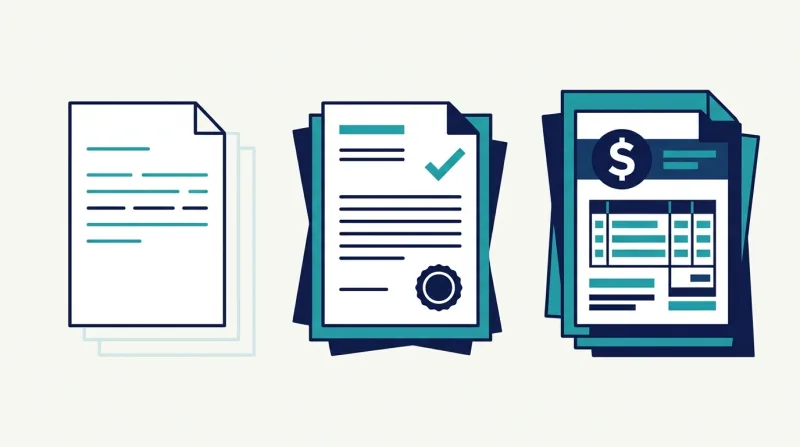
Pre-Approval Letter vs Pre-Qualification vs Proof of Funds: What's the Difference?
A pre-qualification relies on what the buyer reports. A pre-approval reflects a credit pull and, at many lenders, automated underwriting findings. The Consumer Financial Protection Bureau notes that lenders use these labels inconsistently, so judge each document by what was actually checked, not by its title.
| Pre-Qualification | Pre-Approval | Conditional Commitment | Proof of Funds | |
|---|---|---|---|---|
| What it is | Estimate of borrowing power | Lender's written statement of a likely loan amount | Underwriter approval with listed conditions | Evidence of cash on hand |
| What was verified | Mostly self-reported income and debts | Credit pull, often plus Desktop Underwriter (DU) or Loan Product Advisor (LPA) findings | Full file review | Bank or brokerage statements, or a bank letter |
| Typical validity | Varies widely | Often 60–90 days | Until stated expiration | Usually within about 30–60 days |
| Weight for a FSBO seller | Low | Moderate to strong | Strong | Strong for cash; supports financed offers |
| How to verify | Ask for a pre-approval instead | NMLS lookup and lender call | Lender call with authorization | Match the name to the buyer; call the bank if needed |
A pre-approval covers the loan. The down payment, closing costs and earnest money come from the buyer's own funds. A buyer with a $300,000 pre-approval on a $400,000 home still has to show where the other $100,000 comes from, so ask for proof of funds on financed offers too.
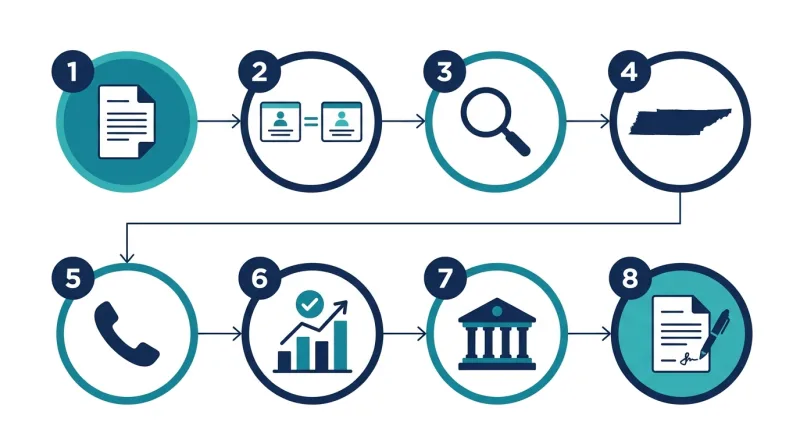
The 8-Step Verification Checklist
- Confirm the basics. The letter should say "pre-approval" and list the loan type (Conventional, FHA, VA or USDA), the amount and an expiration date.
- Match it to the offer. Buyer names should match the purchase agreement, and the amount should support your price minus the stated down payment.
- Look up both NMLS IDs. Search the loan officer and the company on NMLS Consumer Access. The SAFE Act requires mortgage loan originators to be registered or licensed through NMLS.
- Confirm a Tennessee license. Check the company's state licenses in its NMLS record, or use the Tennessee Department of Financial Institutions, which licenses mortgage companies and originators under Tenn. Code Ann. Title 45, Chapter 13.
- Find the phone number yourself. Use the main line on NMLS or the company's official site, never the cell number printed on the letter. Letters can be edited. The lender is the real source of truth.
- Ask how the approval was issued. Ask whether credit was pulled and whether Fannie Mae's Desktop Underwriter or Freddie Mac's Loan Product Advisor findings were issued.
- Check funds to close. Ask whether the down payment has been documented, or request separate proof of funds.
- Write protections into the contract. Set financing contingency deadlines and earnest money terms, and reconfirm loan status before closing.
That phone call takes five minutes. Make it.
Will a Lender Talk to a FSBO Seller?
Yes, if the buyer gives written permission. Without it, expect a polite "I can't discuss that." The Gramm-Leach-Bliley Act (15 U.S.C. § 6801) and Regulation P (12 CFR Part 1016) generally bar lenders from sharing a borrower's nonpublic personal information with outside parties without consent.
The fix: ask in writing for a signed authorization with every offer.
I/We, ______________________, authorize ______________________ (lender), NMLS # , to confirm to the seller of ______________________ (property address) whether my/our pre-approval dated __________ is authentic and current, whether any conditions remain beyond appraisal and title, and whether the approved amount supports a purchase price of $. This does not permit disclosure of my/our credit score, income, assets or account details.
Buyer signature: ______________ Date: ________
On the call, introduce yourself as the seller, mention the signed authorization, and ask four yes-or-no questions:
- Is this letter authentic and still current?
- Was it issued after a credit pull and a DU or LPA run?
- Are any conditions outstanding beyond appraisal and title?
- Does the approved amount support a price of $__________?
Skip credit scores, income, employer, debts and anything personal. The Equal Credit Opportunity Act and Regulation B (12 CFR Part 1002) govern creditors, not sellers, but they make a good guardrail. If a question would be off-limits for a lender's decision, keep it out of your call.
Some lenders refuse even with consent because of internal policy. That alone isn't a red flag. Ask the buyer to have the loan officer email you a fresh, dated letter instead.
Red Flags of a Fake or Weak Pre-Approval
None of these proves fraud, but each means you should dig further:
- No NMLS ID, or an ID that doesn't match the company
- A letter past the lender's validity window (often 60–90 days)
- "To Whom It May Concern" with no buyer name or amount
- A free email domain or a cell-only contact
- A lender not licensed in Tennessee
- An approved amount below your price, with no explanation of the gap
- A buyer who refuses to authorize a lender call
- Proof of funds in someone else's name, with no gift letter
- Pressure to shorten or waive the financing contingency
A letter written to your exact offer price is not a red flag. Loan officers commonly do this to keep the buyer's full budget private. Just confirm the buyer is approved at or above that figure.
When Should You Verify Again?
Re-verify whenever the file changes. A pre-approval is a snapshot. A new car loan, a job change, a rising unlocked rate, or a switch of lenders can turn an approval into a denial weeks after you sign. Ask whether the rate is locked.
Loan type matters too. FHA and VA appraisals check property condition against minimum standards and can require repairs, and USDA loans apply only to eligible addresses. Check yours on USDA's eligibility map before relying on a USDA letter.
Tie check-ins to contract milestones: loan application, appraisal, the financing contingency deadline and clear to close. Federal TRID rules require the buyer to receive a Closing Disclosure at least three business days before closing. Your title company or closing attorney can confirm when it went out.
Can You Screen FSBO Buyers Before Showings in Tennessee?
Yes. You can require a current pre-approval or proof of funds before a showing, as long as the rule is written, objective and applied to everyone.
The federal Fair Housing Act prohibits discrimination based on race, color, religion, sex, national origin, familial status and disability. The Tennessee Human Rights Act adds creed, and the Tennessee Human Rights Commission handles complaints. Don't lean on the "single-family exemption" for owners selling without a broker. It doesn't cover discriminatory statements or advertising, and 42 U.S.C. § 1982 bars racial discrimination in property sales with no FSBO carve-out.
A simple policy works: "Showings are available to anyone who provides a current pre-approval letter or proof of funds, plus a photo ID at the door." Send the same reply to every inquiry, keep a log, and never ask about family plans, faith, origin or disability.
This is easier when buyers arrive prepared. Since NAR's settlement-related practice changes took effect August 17, 2024, buyers working with an MLS participant generally sign a written buyer-broker agreement before touring, and their agents usually collect a lender letter early. A ResultsMLS flat-fee listing puts your home on the Tennessee MLS where those buyers search, while you keep control of the showing policy, the lender calls and the terms. You should still verify every letter yourself.
Frequently Asked Questions
How long is a pre-approval letter valid?
Many lenders set pre-approvals to expire after about 60 to 90 days, though the window is the lender's choice. Check the date on the letter. If it's close or past, ask for an updated letter before you accept.
Can I call the buyer's lender without permission?
You can call, but the Gramm-Leach-Bliley Act generally keeps lenders from discussing a borrower's file without consent. Request a signed authorization with the offer so the loan officer can confirm the letter is genuine and current.
Is a pre-qualification letter good enough?
Usually not. A pre-qualification is typically based on information the buyer reported, without a full credit pull or document review. Ask for a pre-approval showing the loan type, amount and expiration date.
What proof of funds should a cash buyer provide?
A recent bank or brokerage statement, or a bank verification letter, in the buyer's name. Account numbers should be redacted. Never request Social Security numbers. The total should cover the price plus closing costs.
Can I refuse a showing to someone without pre-approval?
Yes, if you put one objective policy in writing and apply it the same way to every buyer. Uneven screening can create problems under the Fair Housing Act and the Tennessee Human Rights Act.
Does a verified pre-approval guarantee the loan will close?
No. Appraisal, title, final underwriting or a change in the buyer's finances can still stop the loan. Keep contingency deadlines firm and verify again before closing.
Before the Next Offer Lands
Draft your buyer authorization and showing policy now, and start a simple verification log. Verify before you accept, and again before closing. It costs a phone call and protects weeks of your time. This is general information, not legal advice. For contract questions, talk to a Tennessee real estate attorney or your closing company.
A flat fee MLS Tennessee listing with ResultsMLS puts your home in front of agent-represented buyers. You still control the screening, the showings and the final yes.