

How to Structure a Buyer Agent Commission Concession in a Nashville Purchase Contract (Post-NAR 2026)
If you're selling your own home in Nashville, the buyer agent commission concession is now something you write into the deal — not something the MLS advertises for you. That single change trips up more FSBO and flat-fee sellers than any other part of the closing process.
Since the 2024 NAR settlement removed cooperating compensation from RealTracs (effective August 17, 2024), a buyer's agent fee no longer lives on the listing. It lives in the contract — in the special stipulations, on specific Tennessee REALTORS® forms, and in the underwriting math that decides whether your buyer can actually close.
Sellers who close cleanly understand three things: where the fee lives now, how to word it, and how lenders treat it. That's what this guide walks through.
One boundary up front: we list houses; we don't give legal advice — have your Tennessee closing attorney review the exact wording before you sign.
What a buyer agent commission concession actually is
A buyer agent commission concession is money the seller agrees to pay toward the buyer's agent — written directly into the Tennessee purchase contract rather than advertised on the MLS. It's negotiated deal-by-deal and documented in the contract's special stipulations.
If you're selling FSBO or on a flat-fee listing in Nashville, you decide whether to offer it, how much, and — the part most sellers get wrong — how it's worded so it survives lender underwriting.
Short version: the fee didn't disappear. It moved from the listing into the paperwork you sign.
Where the buyer agent fee lives now
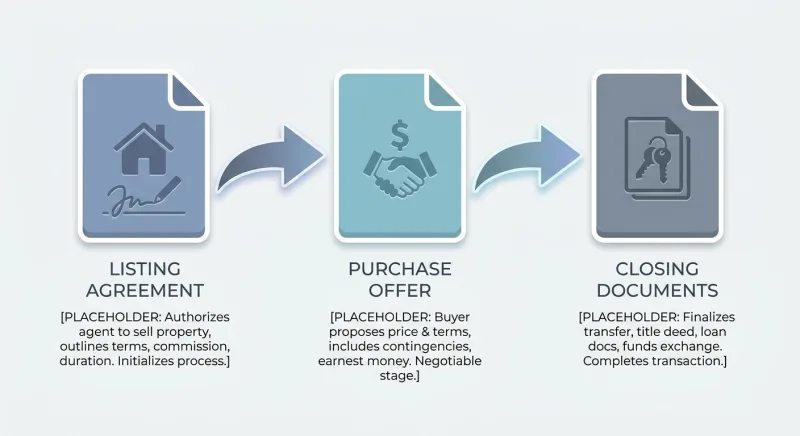
The buyer's agent now negotiates their fee with their own buyer first — a written buyer-broker agreement is required before showings. Any seller contribution toward that fee gets requested and documented inside the purchase contract, usually in the special stipulations.
Under Tennessee law, broker compensation arrangements must be in writing to be enforceable — see T.C.A. § 62-13-312.
Here's what most coverage misses: removing the number from the MLS handed FSBO sellers a tool they never had. The old model set your cost before a single offer arrived — a statewide field advertising 3% to every buyer's agent. Now the concession is a per-contract decision. You can offer nothing and see who writes anyway. You can offer a flat dollar amount to a specific buyer. You can make it contingent on price. The commission stopped being a fixed cost of listing and became a variable you control at the same stage as price, closing date, and repairs.
The three Tennessee REALTORS® forms that carry the concession
| Form | Name / Role | Where the concession shows up |
|---|---|---|
| RF401 | Purchase and Sale Agreement — the master contract | Captures price and closing cost credits; concession language flows into stipulations or an attached addendum |
| RF707 | Additional/Special Stipulations addendum | The clean, dedicated place to write custom buyer-agent compensation wording |
| RF141 | Exclusive Buyer Representation Agreement (buyer-side) | Sets the buyer agent's total fee and the shortfall clause — who covers the gap if the seller's contribution falls short |
Verify current form numbers, names, and versions in the live TAR form library before drafting — TAR revises forms periodically.
Two details matter in 2026. First, RF401 received an update tied to the FinCEN Residential Real Estate Rule, with reporting-related changes effective March 31, 2026 — pull the current version before drafting. Second, the RF141 shortfall clause is the piece competitors skip. If the buyer agreed to pay 2.5% and you concede only 2%, the shortfall clause decides whether the buyer covers that 0.5% out of pocket. A buyer staring at an unexpected shortfall may push back on your price.
How to word and place the concession: step by step
- Decide flat-dollar or percentage. A flat dollar amount is cleaner for underwriting and never moves if the price changes.
- Confirm it's a buyer-agent fee, not a general closing-cost credit. Lenders treat these differently.
- Place it in the special stipulations — RF707, or the stipulations section of RF401. If it isn't in the executed contract, it isn't enforceable.
- Name who receives it. The payment runs to the buyer's brokerage at closing, disbursed through the settlement statement.
- Tie it to closing. State that the amount is paid at closing from seller proceeds through the closing agent.
- Get your closing attorney to review the exact language. Small wording slips create real disputes, including procuring-cause fights over who earned the fee.
Copy-paste clause language (attorney-review required)
Flat-dollar version: "Seller agrees to pay, at closing from Seller's proceeds and through the closing agent, the sum of $______ toward the commission owed by Buyer to Buyer's real estate brokerage, [Brokerage Name]. This contribution is a seller-paid buyer-broker commission and is separate from any credit toward Buyer's other closing costs. Payment shall be reflected on the closing/settlement statement."
Percentage version: "Seller agrees to pay, at closing from Seller's proceeds and through the closing agent, an amount equal to _____% of the Purchase Price toward the commission owed by Buyer to Buyer's real estate brokerage, [Brokerage Name]. This contribution is a seller-paid buyer-broker commission, separate and distinct from any general closing-cost credit, and shall be reflected on the closing/settlement statement."
Always name the receiving brokerage and route the money through the closing agent. "Separate and distinct from any general closing-cost credit" isn't filler — it's the language that helps the lender categorize the payment correctly.
These templates are illustrative and not legal advice. Have a licensed Tennessee attorney review and adapt them before signing.
The two-bucket rule most sellers get backwards
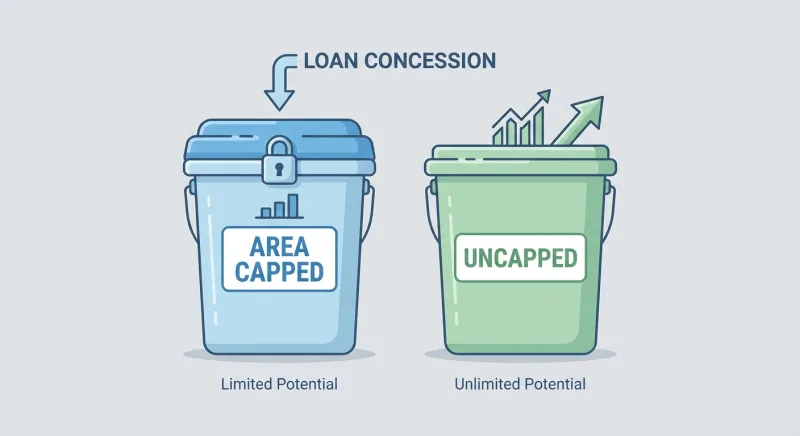
A correctly structured seller-paid buyer-agent commission does not count against your buyer's closing-cost credit cap. Those are two different buckets, and confusing them is where deals die at underwriting.
Bucket one — Interested Party Contributions (capped). Seller-paid costs toward the buyer's closing costs, prepaids, and rate buydowns. Conventional loans cap IPCs at 3% above 90% LTV, 6% from 75.01–90% LTV, and 9% at 75% LTV or below. FHA caps seller contributions at 6%. VA limits seller concessions to 4%.
Bucket two — seller-paid buyer-agent commission (excluded). Following 2024 post-NAR settlement clarifications, Fannie Mae, Freddie Mac, FHA, and VA each treat a properly documented seller-paid buyer-broker commission as a normal cost of sale — not an IPC — so it doesn't touch the capped limits, provided it's a customary, reasonable commission.
On a $525,000 Davidson County purchase at 95% LTV, the IPC ceiling is 3% — roughly $15,750. Say the buyer needs $12,000 in closing-cost help and you're covering a 2.5% ($13,125) buyer-agent fee. Lump both into one blended credit line and you blow the 3% cap. Split them — commission on its own line, closing-cost credit on another — and only the $12,000 counts against the cap. Same money; wildly different outcome decided entirely by the label on the line item.
Verify the buyer's specific loan program treats the commission as excluded before agreeing to a structure. Agency guidance changes and overlays vary by lender.
The procuring-cause trap when you word it loosely
If you offer "2.5% toward buyer's agent compensation" and the buyer arrives with no agent — or an expired buyer-broker agreement — you've committed dollars with no valid party to receive them. A sharp buyer will try to redirect that 2.5% into a price reduction you never intended.
Fix it at the wording level: tie the concession to the existence of a valid buyer-broker agreement and to actual services rendered. Log first contact and condition the fee on the agent being the procuring cause or on a written buyer-broker agreement pre-dating the offer. A verbal agreement is not a structure — it's an argument waiting to happen.
Advanced wording: a clause that survives contingencies
Cap it as a formula, not a frozen dollar. If the buyer drops the price after an appraisal miss, a flat "$13,125" becomes a larger percentage of a smaller loan — potentially enough to push a clean IPC calculation over the limit. Better: word it as a percentage of final contract price with a not-to-exceed dollar ceiling.
Handle the RF141 shortfall on your terms. Two clean approaches: state your ceiling and let the buyer solve the gap ("Seller to contribute up to 2.5%; any excess owed under buyer's representation agreement is buyer's responsibility"), or match a stated shortfall only if you've priced it in. Never agree to "cover whatever the buyer's agent charges."
Which structure for which buyer
| Buyer situation | Best structure | Why |
|---|---|---|
| Represented, financed, tight on cash | Separate buyer-agent commission line (excluded from IPC cap) | Preserves the buyer's IPC room for actual closing costs |
| Wants rate buydown AND agent covered | Two distinct lines: commission (uncapped) + IPC credit (capped) | Keeps both from colliding against the cap |
| Cash buyer with agent | Direct commission concession; caps irrelevant | No loan, no cap — cleanest scenario |
| No agent | No commission concession; consider a modest price adjustment | Nothing to fund; avoids the windfall trap |
| VA buyer | Commission on its own line; watch the 4% concession definition | VA counts certain items narrowly — verify with lender |
Illustrative framework — every deal turns on the buyer's actual loan program. Verify with the buyer's lender before agreeing.
Before you write any number, ask the buyer's lender directly: "Will you treat a seller-paid buyer-agent commission as a cost of sale excluded from IPC limits, or as a capped concession?" Get the answer in writing. Lenders interpret post-NAR guidance unevenly, and the underwriter's classification — not your intention — decides whether the structure holds.
The three-pathway comparison
| Direct buyer-agent concession | General closing-cost credit (IPC) | Buyer pays own agent | |
|---|---|---|---|
| How it's worded | "Seller to pay buyer's broker $X / X%" | "Seller to credit buyer $X toward closing costs" | No seller obligation; buyer's RF141 governs |
| Underwriting bucket | Commission — excluded from IPC cap | IPC — counts against 3/6/9% conv, 6% FHA, 4% VA | N/A to seller |
| Best when | Buyer is agent-represented; you want offer flow | You'd rather help cash-to-close than commission | Buyer is unrepresented or covering their own side |
| Main risk | Wording re-classified into the capped bucket | Cap consumed; excess disallowed at closing | RF141 shortfall creates buyer resistance |
| Reality | Widest buyer pool for a Nashville flat-fee listing | Simplest, but capped | Lowest cost; smallest pool |
Worked math: a $525K Davidson County close
Illustrative only. Assumptions: $525,000 sale, Davidson County, conventional loan above 90% LTV (3% IPC cap), 2.5% seller-paid buyer-agent concession. Figures round. Not a quote.
- 2.5% buyer-agent concession: $13,125 → excluded bucket. Does not touch the buyer's 3% IPC cap.
- Buyer's 3% IPC room: ~$15,750 → still fully available for closing costs and prepaids.
- Blend them into one "credit" instead: $13,125 lands in the capped bucket, leaving roughly $2,625 of IPC room — likely not enough for the buyer's closing costs. Part of your deal gets disallowed.
Same money. Same generosity. Wildly different outcome — decided entirely by which bucket the wording put it in.
One local custom to plan around: in Davidson County it's customary (not law, and negotiable) for the seller to pay the buyer's owner's title policy. Williamson County practice can differ. Budget that line separately from the concession so it doesn't quietly eat into your net.
Frequently Asked Questions
Where does the buyer agent commission go now that RealTracs removed it?
Since the 2024 NAR settlement took effect on RealTracs on August 17, 2024, any offer of buyer-agent compensation is negotiated inside the Tennessee purchase contract — typically the special stipulations on Form RF707 — rather than advertised on the MLS. The listing stays silent on compensation; the number lives in the signed agreement.
How do I word a buyer agent concession in a Tennessee purchase contract?
State it plainly in the special stipulations: name the amount (flat-dollar or a percentage of the sales price), specify it is paid at closing from seller proceeds to the buyer's broker, and make it contingent on closing. Have your Tennessee closing attorney review the exact wording before you sign — we list houses; we don't give legal advice.
Does a seller-paid buyer agent commission count against the buyer's seller-concession cap?
No — a correctly structured seller-paid buyer-agent commission is treated as a sales cost and excluded from Interested Party Contribution (IPC) caps under current Fannie Mae, Freddie Mac, FHA, and VA guidance. That is separate from the capped bucket covering closing costs and prepaids, which conventional loans limit to 3/6/9% by LTV, FHA to 6%, and VA to 4%.
Can a Nashville FSBO seller refuse to pay any buyer agent commission?
Yes — offering buyer-agent compensation is optional and negotiable for every FSBO or flat-fee seller in Middle Tennessee. Many sellers offer nothing and let the buyer pay their own agent under Form RF141; others offer a concession to widen the buyer pool. Both are valid strategies depending on your market.
What Tennessee form documents the buyer agent concession?
The concession is captured in the purchase agreement (Form RF401), usually expanded through the Additional Contract Language / Special Stipulations form (RF707), while the buyer's own agreement to pay any shortfall lives in the Exclusive Buyer Representation Agreement (RF141). Tennessee law also requires broker compensation to be in writing under T.C.A. § 62-13-312.
The bottom line
Post-NAR, the buyer-agent fee moved off the RealTracs listing and into the four corners of your contract — and that shift put the pen in your hand.
You decide whether to offer a concession. If you do, write it into the special stipulations with a clear amount, a clear payee, and a clear "paid at closing" trigger. Confirm your buyer's loan can absorb it — a correctly structured buyer-agent commission sits outside the IPC caps, while general closing-cost credits do not. In Davidson County, price in local customs before you agree to a number.
Where sellers trip up is treating the concession as an afterthought instead of a line item they underwrite. Run the cash-to-close math first. Name the form. Get the wording reviewed.
One boundary worth repeating: we list houses; we don't give legal advice — have your Tennessee closing attorney confirm the exact clause language before you sign.
When you're ready to get the listing live, a flat-fee Nashville MLS listing puts your home in front of every buyer's agent in Middle Tennessee for one flat price — and lets you sell your house in Nashville without a full-service realtor while keeping full control of the compensation you offer. Structure the concession with intention, and the settlement changes stop being a headache and start being leverage.