

How to Advertise Buyer Agent Commission Off-MLS in Tennessee (2026)
If you're selling your own home in Tennessee and wondering how to advertise buyer agent commission off MLS, here's the short version: since the August 2024 NAR settlement, you can't post buyer-broker compensation inside the MLS anymore. But you can still tell agents what you'll pay — just outside the MLS, through direct conversation, your own FSBO marketing, or a concession written into the purchase contract.
RealTracs, East Tennessee REALTORS, and MAAR in Memphis each removed the old compensation field. The rules that replaced it aren't obvious, and the generic "just disclose when asked" advice skips the mechanics — the part where a wrong move can create a real compliance problem for the licensed broker who submitted your listing.
This guide covers the RealTracs rule that actually governs off-MLS advertising, an honest comparison of your four realistic options, the exact contract mechanics that finalize payment at closing, and straight guidance on how much sellers are commonly offering in 2026.
Why Buyer-Agent Commission Moved Off the MLS
For years, a Tennessee seller listed on the MLS and the listing broker published a "cooperative compensation" offer right there in the system. That's over. The NAR settlement required MLSs to stop displaying offers of buyer-broker compensation, rolling out nationally in August 2024. Tennessee's major MLSs updated in step.
Two things are true at once. You can still pay a buyer's agent whatever you agree to. But you can no longer advertise that offer inside the MLS or through the data that flows out of it.
That last part matters more than most sellers realize. The rule doesn't just cover the MLS screen an agent logs into — it reaches the IDX feeds pushing your property to Zillow, Redfin, and Realtor.com. The flat-fee broker who put your listing in the system is bound by these rules, and a compensation offer in the wrong field creates a real problem for them. Off-MLS advertising isn't a loophole. It's the compliant path.
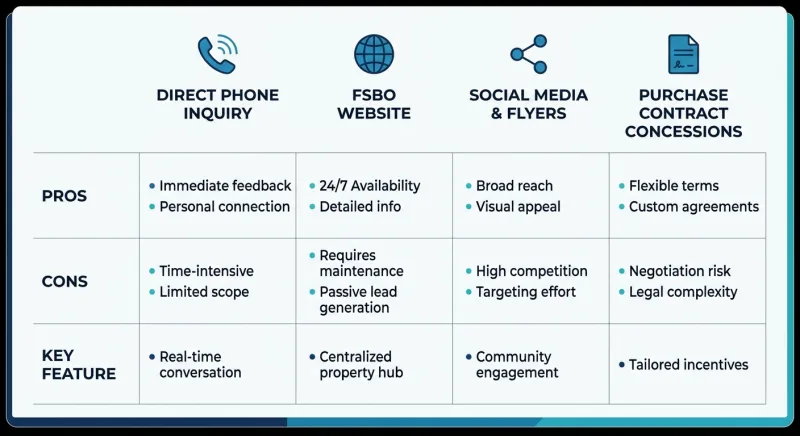
The RealTracs Rule That Trips Up Tennessee Sellers
RealTracs — covering Nashville, Franklin, Murfreesboro, Brentwood, Clarksville, and most of Middle Tennessee — prohibits using MLS data (including IDX feeds) to advertise or aggregate offers of buyer-broker compensation. Its rules also restrict what can go in private remarks and external links attached to a listing.
In plain English: dropping "buyer agent paid 3%" into the agent-only remarks field, or linking to a page that says it, isn't a workaround anymore. It's a rules violation for the broker who submitted the listing.
"Off-MLS" is broader than most sellers assume. It means not in the MLS, not in the private remarks, and not in the data that leaves the MLS. Your website, your direct conversations, and your purchase contract are fair game. The MLS and everything downstream of it are not.
If you're not sure whether something crosses that line, ask your flat-fee broker before you post it.
Off-MLS Methods Compared: Which Way Should You Advertise?
| Method | How it works | Compliance risk | Best for |
|---|---|---|---|
| Direct phone/email inquiry | You state the offer only when an agent asks, one-on-one | Low — private communication, no MLS involvement | Every seller; this is the default |
| Your FSBO website / flyers | Post "buyer's agent compensation available — call to discuss" on your own materials | Low — your channels (keep it off any MLS-fed page) | Sellers driving their own marketing |
| Social media & signage | Mention availability on Facebook Marketplace, a yard-sign rider, open-house flyers | Low–moderate — fine on your own posts; never in MLS-syndicated content | Local buzz, walk-in buyers |
| Purchase contract concessions | Buyer's agent brings an offer with seller concessions covering their fee | Lowest — negotiated and documented at closing | Sellers who'd rather negotiate than pre-advertise |
The direct inquiry method is what most Tennessee sellers use, because agents almost always call to ask before they show. You don't have to advertise a number to the world — you just have to be ready to answer.
Your own website and flyers are genuinely yours. The rules restrict the MLS and its feeds, not your Facebook page. Just don't embed compensation on a listing page pulling data from the MLS.

How Seller Concessions Get the Buyer's Agent Paid (Step by Step)
If you don't want to advertise a commission at all, let it happen inside the offer.
- The offer arrives. A represented buyer's agent submits a purchase and sale agreement — commonly the Tennessee REALTORS form RF401 — often with a seller-concessions figure written in.
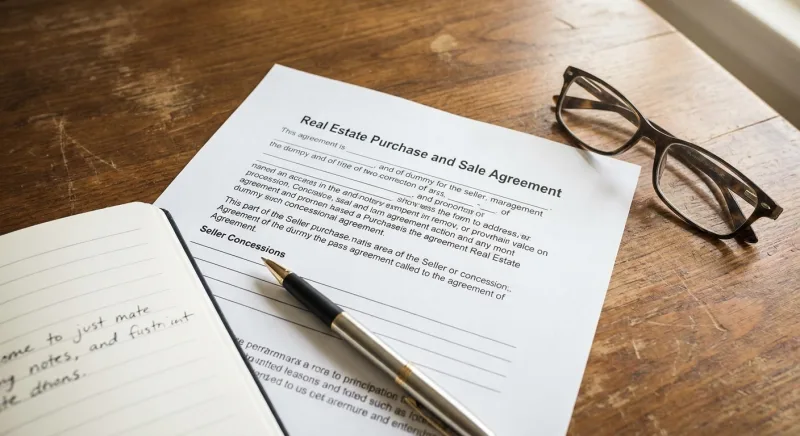
- You negotiate the concession, not "the commission." You're agreeing to a credit the buyer controls, directed toward their agent's fee under their own buyer representation agreement. Some structures use a supplemental form such as the RF620 Compensation Addendum — confirm the exact form with your closing attorney.
- The closing agent codes it. At settlement, the credit appears on the ALTA settlement statement as a seller concession, reducing your net proceeds by exactly that figure.
You're not paying the buyer's broker. You're giving the buyer a credit; the buyer's agreement with their agent determines where it goes. Structure it as "I'll pay the buyer's broker $X" inside a channel the MLS touches, and you've walked back into the prohibited zone. Structure it as a buyer concession at close, and you're clean.
One caution. Conventional, FHA, and VA loans each cap concessions differently. If you verbally agree to 3% but the buyer's FHA loan caps concessions below what they need for both closing costs and agent pay, the deal can jam late. Ask the buyer's agent early which loan program applies — and confirm the limits with your closing attorney or title company, not the day before closing.
The Line You Can't Cross
A general seller concession — "seller will consider concessions" — is fine on your own materials and in an offer. It's flexible, negotiated, and doesn't earmark money for a particular party inside the MLS.
What you can't do is use the MLS or its feeds to advertise that you'll pay the buyer's broker a set commission. One version is a private, negotiable term of your sale. The other is an advertised offer of cooperative compensation in a system no longer allowed to carry it. Same money, very different compliance status.
Keep it simple: advertise the door, not the dollar, on the MLS. The "door" is a generic signal — concessions available, seller flexible. The "dollar" lives on the phone, on your own channels, and finally in the seller-concession line of the purchase agreement.
Sequencing the Channels (Order of Operations)
Stage 1 — Passive signal. Your listing shows a generalized "Seller Concessions Offered" status. You advertise nothing about buyer-agent pay and wait for the call. Lowest risk possible. The tradeoff: some agents screen out listings that don't telegraph a number.
Stage 2 — Direct verbal disclosure. When an agent asks, you answer a specific person a specific question. A phone call is not a data feed. This is where most Tennessee FSBO sellers should live — compliant, flexible, and limits disclosure to represented buyers so you're not committing to a number for unrepresented buyers.
Stage 3 — Standalone page or flyer. You post the number on a page or printed sheet that is not part of any IDX feed. Confirm your flat-fee platform isn't syndicating that page back into RealTracs or out to Zillow — because if it is, you've re-introduced the Stage-1 prohibition through the back door.
Stage 4 — Contract concessions. Everything above is marketing. Stage 4 is the money actually moving, converted into an enforceable term on the ALTA statement.
Edge Cases That Break the Simple Advice
The unrepresented buyer who shows up mid-deal. You've disclosed "2.5% to a cooperating agent" on three calls. Then a buyer arrives with no agent. You owe nobody a buyer-agent payment. But if you advertised the concession as a flat buyer credit, an unrepresented buyer can reasonably expect it as a price reduction. Verbal disclosure beats a posted flyer number precisely because verbal lets you scope the offer to represented buyers.
Multiple offers with different asks. One agent wants 3%, another 2%, one buyer is unrepresented. Evaluate net proceeds, not headline price. A $410K offer asking 3% concessions nets you less than a $405K offer at 2%. Build a net-to-you column for every offer before you anchor on the top-line number.
How Much to Offer — and Whether to Signal It
No, you don't have to offer anything — but here's what most articles skip. After the settlement, buyers sign a buyer representation agreement before touring a home, often obligating them to pay their agent a set fee if the seller doesn't cover it. When your listing signals "no concessions," you've quietly created a cash problem for every cash-tight buyer whose agent has them under contract. That showing never gets scheduled, and you never know why.
Offering nothing is legal and usually costs you showings. In Middle Tennessee, where most transactions involve a represented buyer, that invisible cost tends to outweigh the savings.
Use this ladder:
- Hot pocket, low inventory (parts of Nashville, Franklin, Brentwood in a tight season): signal a generalized concession status and let it play out. Buyers compete; you hold leverage.
- Balanced or slower market, or a hard-to-sell feature: proactively cover buy-side compensation to keep showings flowing.
- Price-sensitive buyer segment: frame the number as a concession the buyer can split between closing costs and agent pay — it does double duty.
Tennessee sellers commonly offer in the range of 2–3% buy-side heading into 2026, though it's negotiable per deal and increasingly untethered from old fixed norms. Treat that as a starting anchor, not a rule.
Frequently Asked Questions
Can I advertise a buyer's agent commission on the MLS in Tennessee?
No. Following the 2024 NAR settlement, RealTracs, East Tennessee REALTORS, and MAAR removed the fields that displayed buyer-broker compensation, so any offer to a buyer's agent now happens off-MLS or inside the purchase contract.
Do I have to offer a buyer's agent commission as a Tennessee FSBO seller?
No, you're not required to offer anything. But most Tennessee sellers who offer nothing see fewer showings, which is why many still signal a seller concession or offer buyer-agent compensation off-MLS to keep agent-represented buyers interested.
How do sellers legally tell buyer's agents what they'll pay off-MLS?
You can state it directly when an agent calls, post it on your own FSBO website or flyers, or negotiate it as a seller concession inside the purchase and sale agreement (Form RF401). What you cannot do is route that offer back through the MLS listing.
What's the difference between a seller concession and a buyer-agent commission?
A seller concession is a general credit toward the buyer's costs — it's a credit the buyer controls and can direct toward their agent's fee. Earmarking or conditioning that concession specifically on paying the buyer's broker inside the MLS is what NAR rules and RealTracs restrict.
How much buyer-agent compensation should a Nashville seller offer in 2026?
There's no set number, but Tennessee sellers commonly offer in the range of 2–3% of the sale price. Confirm current local norms and exact figures with your closing attorney before committing anything in writing.
This explains mechanisms, not legal advice — confirm form numbers, rules, and concession structuring with your Tennessee closing attorney before you commit.
The Bottom Line
The rules changed, but your goal didn't: you still want agent-represented buyers walking through your door without overpaying to get them there. The difference now is where and how you say what you'll pay.
Keep the offer off the MLS itself. Tell an agent directly when they call, post it on your own FSBO page or flyers, or fold it into the purchase contract as a seller concession using the standard Tennessee forms. Any of those three paths keeps you on the right side of the RealTracs rules and TREC oversight.
You don't need a full-service agent to do this correctly. You need a compliant listing, a clear script, and the right form.